top of page

The pine marten (Martes martes) is a medium-sized carnivore from the weasel family (Mustelidae); It is somewhat smaller than a house cat, normally weighing around one kilogram, with a slim, flexible body, strong springy limbs and long tail. It is generally brownish – anywhere from chocolate to tan – with a large contrasting yellowish patch on its neck. In winter, it grows thick, soft fur, which is why it has been among the most important furbearing species for centuries. It has an extensive range, stretching from Western Europe, including some of the British Isles, to the east across the Urals, reaching the Siberian rivers Irtysh and upper Ob; beyond that, it is replaced by its close relative, the sable (Martes zibellina), which occupies a very similar ecological niche. It is critically endangered in England and Wales, but is generally treated as Least Concern by IUCN. The pine marten is a fast and tenacious predator, targeting a variety of animals, from frogs, rodents and shrews to large birds, such as the capercaillie (Tetrao urogallus) – a strong, turkey-sized grouse. It also eats fruits, nuts, insects – and it is a notorious nest robber.

ree
Pine marten by Caroline Legg, [CC BY 2.0], via flickr.com

The pine marten has likely co-evolved with its main prey, the red squirrel (Sciurus vulgaris) – its excellent vestibular apparatus, semi-retractable claws, and long, bushy tail with longer guard hair than in any other marten are adaptations to fast-paced arboreal hunts. However, in one part of its range, it has become the savior of the squiggly reds. In Scotland, the red squirrel was pushed away from its original habitats by the larger, more aggressive grey squirrels (Sciurus carolinensis) – an introduced North American species. The tables turned when the pine marten, previously nearly eradicated by local gamekeepers for the sake of grouse hunters, made a comeback to its former range after the species was granted full protection in 1988. Since red squirrels are generally on a par with their nemesis in terms of tree top acrobatics, martens opted for easier prey and feast on the heavier, slower greys, clearing out the living space for the reds.


We present the chromosome-length assembly for yet another – but not the final – species in the genus Martes. All C-scaffolds (Lewin et al. 2019) of the pine marten were assigned to the corresponding chromosomes via a Zoo-FISH experiment with the stone marten chromosomes used as probes. Both the stone and pine marten have the same diploid number of chromosomes (2n=38) with no detected translocations, so we arranged the pine marten chromosomes in the same order as in the stone marten karyotype. Among other types of rearrangements only several inversions were found (Fig. 1).

ree
Figure 1. Whole genome alignment plot for the pine marten (mmar.min_150.pseudohap2.1_HiC) to the stone marten (mfoi.min_150.pseudohap2.1_HiC)

We thank Dr. Rogell Powell (North Carolina State University) for funding 10x Genomics linked-read sequencing for the draft assembly and Dr. Klaus Koepfli for organizing this sequencing and bringing all of the collaborators together. Also we thank Sergei Pisarev, Pavel Reznichenko and Ksenia Koniaeva from the zoo “Lesnaya skazka” (eng. “Forest tale”) in Barnaul, Russia, who provided samples for a cell line. These cells were used for both DNA extraction for linked read sequencing and for HiC experiments. DNA extraction and Zoo-FISH experiments were performed by Natalia Serdyukova and Dr. Violetta Beklemisheva. The initial assembly was performed by Sergei Kliver. Hi-C experiments and scaffolding to chromosomes were done by Polina Perelman, Ruqayya Khan, David Weisz and Olga Dudchenko. The genome annotation and a paper describing this research is in progress.


Citations:


Updated: Feb 22, 2021

Yellowfin tuna Thunnus albacares is a popular recreational and commercial species that has a vital role in global food security. This high value species is more than just seafood. It is a top predator and plays an important role in the marine food chain maintaining an ecosystem balance in the ocean environment.

ree
Photo Description: Yellowfin (Thunnus albacares). Photo Copyright: CSIRO O&A, Australia. Drawing by Roger Swainston.

Also known as ahi, yellowfin are named such because of their – well, you guessed it – yellow fins. Aside from their yellow fins and finlets, they also have yellow to silver belly and metallic dark-blue back. Their bodies are shaped like torpedoes, allowing them to swim fast and continuously. Yellowfin tuna are medium sized yet they are bigger than Albacore and skipjack. The average size of the yellowfin tuna varies but in general they are a big fish. The world record yellowfin tuna was 224cm long and weighed close to 194kg.


Yellowfin tuna are a “highly migratory species”, crossing many national jurisdictions in their life time and being harvested by a range of industrial, artisanal and recreational fisheries. As a result, they require careful consideration, international collaboration and innovative science to support sustainable management. Molecular genetics plays an important role in providing key information to guide sustainable management practices by informing on stock structure of this important species (1, 2).


To help with the population structure, chain of custody and new methods for estimating abundance, such as Close-kin Mark Recapture (3) towards monitoring and management of these globally important fisheries DNA Zoo has been working with Dr. Pierre Feutry and Dr. Peter Grewe, CSIRO Oceans and Atmosphere, Hobart, Australia, to get a chromosome-length assembly genome.

The assembly we share today is based on a draft published by Malmstrøm et al 2017. The draft was scaffolded to 24 chromosomes (see interactive map below) with 132, 467, 299M Hi-C reads generated by DNA Zoo labs using 3D-DNA (Dudchenko et al., 2017) and Juicebox Assembly Tools (Dudchenko et al., 2018). See our Methods page for more details!

We gratefully acknowledge the yellowfin tissue sample provided by Gary Heilmann, De Brett Seafood, Mooloolaba, Queensland. The Hi-C work was supported by resources provided by DNA Zoo Australia, The University of Western Australia (UWA), DNA Zoo and CSIRO Oceans and Atmosphere, Hobart, Australia with additional computational resources and support from the Pawsey Supercomputing Centre with funding from the Australian Government and the Government of Western Australia.


This genome will facilitate projects examining population genetics of this species providing critical information on population connectivity and stock structure to help guide sustainable management of the species.


The following people contributed to the Hi-C chromosome-length upgrade of the project: Erez Aiden, Olga Dudchenko, Ashling Charles & Parwinder Kaur.


Blog by: Parwinder Kaur, Peter Grewe, Pierre Feutry, Chris Gerbing and Campbell Davies.


Citations

1. Grewe, P. M. and Feutry, P. and Hill, P. L. and Gunasekera, R. M. and Schaefer, K. M. and Itano, D. G. and Fuller, D. W. and Foster, S. D. and Davies, C. R. (2015) Evidence of discrete yellowfin tuna (Thunnus albacores) populations demands rethink of management for this globally important resource. Scientific Reports 5:16916. DOI: 10.1038/srep16916


2. Moorehead, Anne, (2015). Next gen sequencing means a brighter future for yellowfin tuna. ECOS: https://ecos.csiro.au/a-brighter-future-for-yellowfin-tuna/


3. Bravington, Mark V., Peter M. Grewe, and Campbell R. Davies. "Absolute abundance of southern bluefin tuna estimated by close-kin mark-recapture." Nature Communications 7.1 (2016): 1-8.


Updated: Feb 12, 2021

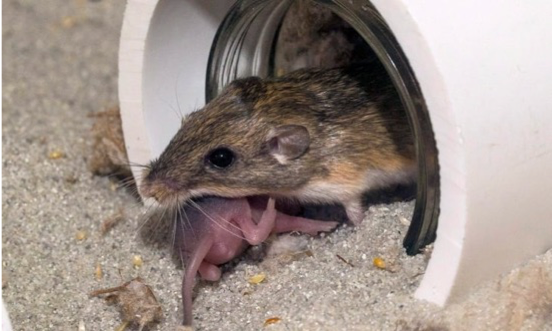
Weighing about as much as six paper clips, the endangered Pacific pocket mouse (PPM) aka Perognathus longimembris pacificus is the among the smallest rodents in the world. It historically occupied a stretch of sandy soil habitat along the coast of southern California, playing a vital role in ecosystem function by dispersing seeds of native plants and promoting nutrient cycling in the soil through the digging of its burrows. Thought to be extinct for several decades, PPM was rediscovered in 1993 in three small, isolated populations, and emergency listed under the U.S. Endangered Species Act.

Photos provided by Aryn Wilder, San Diego Zoo ( © San Diego Zoo)


In 2012, the San Diego Zoo Wildlife Alliance, in cooperation with the U.S. Fish and Wildlife Service and the California Department of Fish and Wildlife, established a conservation breeding program with the goal of reintroducing PPM into unoccupied regions in their historic range. In addition to facilitating the return of the species to their native habitat, the breeding program also serves as a useful model for studying the role of genetic load in inbreeding depression, and the patterns and impacts of karyotypic differences that have been observed in this species. In this way, exploring the genomics of PPM will help to better design management strategies to help preserve genetic diversity in this and other endangered species.


Today, we share the chromosome-length assembly for the Pacific pocket mouse. Scientists at the San Diego Zoo Wildlife Alliance generated an initial assembly of the Pacific pocket mouse genome in collaboration with Dovetail Genomics, and the Hi-C experiments and upgrade as been done by DNA Zoo. The genome annotation and a paper describing this research is in progress, so stay tuned!


About DNA Zoo

DNA Zoo is a multinational consortium whose goal is to accelerate conservation efforts by rapidly disseminating the DNA sequences of many life forms, and improving the methods for reconstructing such sequences. DNA Zoo is committed to open-source release of data and methods; genome assemblies produced by DNA Zoo are available without restriction at DNAzoo.org. To date, DNA Zoo has released chromosome-length genome assemblies for over 3% of mammalian species.


About San Diego Zoo Global

Bringing species back from the brink of extinction is the goal of San Diego Zoo Global. As a leader in conservation, the work of San Diego Zoo Global includes on-site wildlife conservation efforts (representing both plants and animals) at the San Diego Zoo, San Diego Zoo Safari Park, and San Diego Zoo Institute for Conservation Research, as well as international field programs on six continents. The work of these entities is made accessible to over 1 billion people annually, reaching 150 countries via social media, our websites and the San Diego Zoo Kids network, in children’s hospitals in 12 countries. The work of San Diego Zoo Global is made possible with support from our incredible donors committed to saving species from the brink of extinction.


About Dovetail Genomics LLC

Dovetail Genomics LLC is the world leader in proximity ligation technology for genome assembly and epigenetic chromatin conformation profiling. To date, Dovetail has delivered over 1500 high quality, chromosome-scale genome assemblies, across hundreds of taxa and to hundreds of researchers globally. Dovetail provides a complete sample-to-publishable assembly workflow for de novo assembly of virtually any organism and also provides proximity ligation kits for DIY assembly. Dovetail also provides a suite of epigenetics kits and services, including Micro-C, HiChIP and Omni-C for epigenetic chromatin profiling.


Join our mailing list

ARC-Logo-Final-2018-01.png

© 2018-2022 by the Aiden Lab.

bottom of page