top of page

Updated: Feb 22, 2021

Yellowfin tuna Thunnus albacares is a popular recreational and commercial species that has a vital role in global food security. This high value species is more than just seafood. It is a top predator and plays an important role in the marine food chain maintaining an ecosystem balance in the ocean environment.

Photo Description: Yellowfin (Thunnus albacares). Photo Copyright: CSIRO O&A, Australia. Drawing by Roger Swainston.

Also known as ahi, yellowfin are named such because of their – well, you guessed it – yellow fins. Aside from their yellow fins and finlets, they also have yellow to silver belly and metallic dark-blue back. Their bodies are shaped like torpedoes, allowing them to swim fast and continuously. Yellowfin tuna are medium sized yet they are bigger than Albacore and skipjack. The average size of the yellowfin tuna varies but in general they are a big fish. The world record yellowfin tuna was 224cm long and weighed close to 194kg.


Yellowfin tuna are a “highly migratory species”, crossing many national jurisdictions in their life time and being harvested by a range of industrial, artisanal and recreational fisheries. As a result, they require careful consideration, international collaboration and innovative science to support sustainable management. Molecular genetics plays an important role in providing key information to guide sustainable management practices by informing on stock structure of this important species (1, 2).


To help with the population structure, chain of custody and new methods for estimating abundance, such as Close-kin Mark Recapture (3) towards monitoring and management of these globally important fisheries DNA Zoo has been working with Dr. Pierre Feutry and Dr. Peter Grewe, CSIRO Oceans and Atmosphere, Hobart, Australia, to get a chromosome-length assembly genome.

The assembly we share today is based on a draft published by Malmstrøm et al 2017. The draft was scaffolded to 24 chromosomes (see interactive map below) with 132, 467, 299M Hi-C reads generated by DNA Zoo labs using 3D-DNA (Dudchenko et al., 2017) and Juicebox Assembly Tools (Dudchenko et al., 2018). See our Methods page for more details!

We gratefully acknowledge the yellowfin tissue sample provided by Gary Heilmann, De Brett Seafood, Mooloolaba, Queensland. The Hi-C work was supported by resources provided by DNA Zoo Australia, The University of Western Australia (UWA), DNA Zoo and CSIRO Oceans and Atmosphere, Hobart, Australia with additional computational resources and support from the Pawsey Supercomputing Centre with funding from the Australian Government and the Government of Western Australia.


This genome will facilitate projects examining population genetics of this species providing critical information on population connectivity and stock structure to help guide sustainable management of the species.


The following people contributed to the Hi-C chromosome-length upgrade of the project: Erez Aiden, Olga Dudchenko, Ashling Charles & Parwinder Kaur.


Blog by: Parwinder Kaur, Peter Grewe, Pierre Feutry, Chris Gerbing and Campbell Davies.


Citations

1. Grewe, P. M. and Feutry, P. and Hill, P. L. and Gunasekera, R. M. and Schaefer, K. M. and Itano, D. G. and Fuller, D. W. and Foster, S. D. and Davies, C. R. (2015) Evidence of discrete yellowfin tuna (Thunnus albacores) populations demands rethink of management for this globally important resource. Scientific Reports 5:16916. DOI: 10.1038/srep16916


2. Moorehead, Anne, (2015). Next gen sequencing means a brighter future for yellowfin tuna. ECOS: https://ecos.csiro.au/a-brighter-future-for-yellowfin-tuna/


3. Bravington, Mark V., Peter M. Grewe, and Campbell R. Davies. "Absolute abundance of southern bluefin tuna estimated by close-kin mark-recapture." Nature Communications 7.1 (2016): 1-8.


Updated: Feb 12, 2021

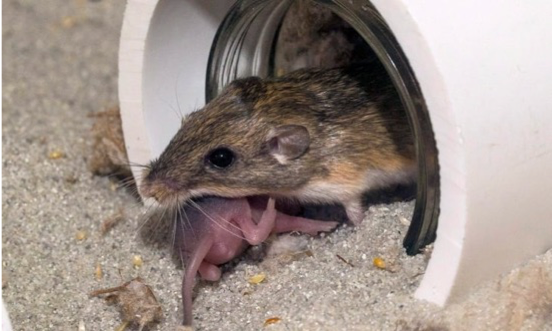
Weighing about as much as six paper clips, the endangered Pacific pocket mouse (PPM) aka Perognathus longimembris pacificus is the among the smallest rodents in the world. It historically occupied a stretch of sandy soil habitat along the coast of southern California, playing a vital role in ecosystem function by dispersing seeds of native plants and promoting nutrient cycling in the soil through the digging of its burrows. Thought to be extinct for several decades, PPM was rediscovered in 1993 in three small, isolated populations, and emergency listed under the U.S. Endangered Species Act.

Photos provided by Aryn Wilder, San Diego Zoo ( © San Diego Zoo)


In 2012, the San Diego Zoo Wildlife Alliance, in cooperation with the U.S. Fish and Wildlife Service and the California Department of Fish and Wildlife, established a conservation breeding program with the goal of reintroducing PPM into unoccupied regions in their historic range. In addition to facilitating the return of the species to their native habitat, the breeding program also serves as a useful model for studying the role of genetic load in inbreeding depression, and the patterns and impacts of karyotypic differences that have been observed in this species. In this way, exploring the genomics of PPM will help to better design management strategies to help preserve genetic diversity in this and other endangered species.


Today, we share the chromosome-length assembly for the Pacific pocket mouse. Scientists at the San Diego Zoo Wildlife Alliance generated an initial assembly of the Pacific pocket mouse genome in collaboration with Dovetail Genomics, and the Hi-C experiments and upgrade as been done by DNA Zoo. The genome annotation and a paper describing this research is in progress, so stay tuned!


About DNA Zoo

DNA Zoo is a multinational consortium whose goal is to accelerate conservation efforts by rapidly disseminating the DNA sequences of many life forms, and improving the methods for reconstructing such sequences. DNA Zoo is committed to open-source release of data and methods; genome assemblies produced by DNA Zoo are available without restriction at DNAzoo.org. To date, DNA Zoo has released chromosome-length genome assemblies for over 3% of mammalian species.


About San Diego Zoo Global

Bringing species back from the brink of extinction is the goal of San Diego Zoo Global. As a leader in conservation, the work of San Diego Zoo Global includes on-site wildlife conservation efforts (representing both plants and animals) at the San Diego Zoo, San Diego Zoo Safari Park, and San Diego Zoo Institute for Conservation Research, as well as international field programs on six continents. The work of these entities is made accessible to over 1 billion people annually, reaching 150 countries via social media, our websites and the San Diego Zoo Kids network, in children’s hospitals in 12 countries. The work of San Diego Zoo Global is made possible with support from our incredible donors committed to saving species from the brink of extinction.


About Dovetail Genomics LLC

Dovetail Genomics LLC is the world leader in proximity ligation technology for genome assembly and epigenetic chromatin conformation profiling. To date, Dovetail has delivered over 1500 high quality, chromosome-scale genome assemblies, across hundreds of taxa and to hundreds of researchers globally. Dovetail provides a complete sample-to-publishable assembly workflow for de novo assembly of virtually any organism and also provides proximity ligation kits for DIY assembly. Dovetail also provides a suite of epigenetics kits and services, including Micro-C, HiChIP and Omni-C for epigenetic chromatin profiling.


The fishing cat (Prionailurus viverrinus) gets their name from their love of water. Fishing cats have been observed “fishing” at the edge of water, scooping their prey seamlessly (1). They are one of the best swimmers around, equipped with webbing between their toes to help both with swimming and with walking in muddy wetlands without sinking (2). The fishing cat’s fur consists of two layers: a short and dense layer to conserve warmth and keep the skin dry when in the water, and a layer of longer hairs (referred to as guard hairs) which give the cat it’s colour pattern, used for camouflage (2). This pattern is a combination of spots and stripes, where the stripes run down from above the eyes between the ears onto the neck, breaking up on the shoulders. The short hair on the face is spotted, and its whiskers are short (1).

Fishing cat by kellinahandbasket, [CC BY 2.0], via flickr.com

Fishing cats are found in scattered areas of the Oriental Region. They inhabit the peninsular region of India, Sri Lanka, Malaysia, Thailand, Java, and Pakistan (1). Although fishing cats are attracted to all types of water and live in wetlands predominantly, they have been found in tropical dry forests and in the Indian Himalayas at elevations of 4,900 feet (1,500 meters) in dense vegetation near rivers or streams. Little is known about fishing cats in the wild, but it is thought that they have no natural predators other than humans (2).


Like many smaller felines, the fishing cat communicates with hisses, growls, and even meows. During a courtship, the male and female will make chittering sounds with the female signaling her willingness to breed and the male communicating submissiveness. The females give birth in the spring to an average of two kittens in a litter, raising their young without help from the male (how’s that for a catfish). The kittens will then learn to fish by watching their mother, and at 10 months will be ready to venture out on their own (2).


Its dependence on water is likely to cause trouble for the species, as it is estimated around 50 percent of Southeast Asia wetlands are disappearing as the human population grows (2). Of the remaining wetlands, they are affected by pollution, over-farming and chemical fertilizer runoff, overfishing by humans, and drainage issues (2). In addition to this, the fishing cat is also a victim of poaching. They are often hunted for food, medicine, or various body parts (1). Accordingly, the fishing cat is listed as vulnerable on the International Union for Conservation of Nature and Natural Resources (IUCN) Red List (IUCN 2003) and is included on Appendix II of the Convention on International Trade in Endangered Species (3).


Today, we share a 1K de novo assembly for the species (see Dudchenko et al., 2018). See our Methods page for more detail! We thank San Antonio Zoo for the sample that was used for this assembly!


This work was in part supported by DNA Zoo Australia, The University of Western Australia (UWA), with compute at the Pawsey Supercomputing Centre with funding from the Australian Government and the Government of Western Australia.


Blog by: Ashling Charles and Parwinder Kaur


Join our mailing list

ARC-Logo-Final-2018-01.png

© 2018-2022 by the Aiden Lab.

bottom of page